
Originally Posted On: https://www.theboxery.com/blog/how-to-match-mailing-boxes-to-product-weight-for-fewer-damaged-returns/
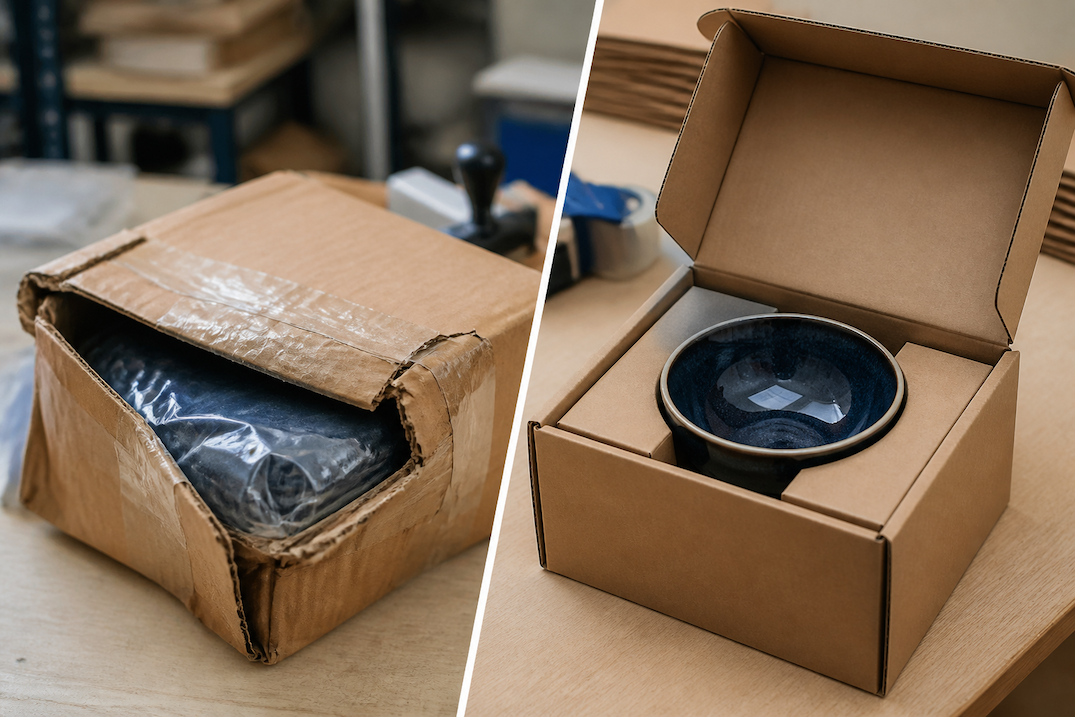
Here’s a number that should bug you: a huge chunk of e-commerce returns aren’t because the product was wrong — they’re because it showed up cracked, dented, or rattling around loose. I spent years running my own shop before I got into packaging consulting, and I made almost every mistake in the book, including shipping ceramic mugs in the same flimsy box I used for T-shirts.
The fix isn’t complicated, but it does require dropping the habit of grabbing whatever box is closest to your desk. Matching mailing boxes to the actual weight and density of what’s inside is the single cheapest way to cut damage claims — cheaper than better tape, cheaper than more bubble wrap, cheaper than eating another refund. Get the weight-to-box match right, and you’ll notice fewer angry messages, lower postage costs, and a lot less guesswork on packing day. This isn’t about buying fancier supplies. It’s about being deliberate with the ones you already have — or knowing exactly which ones to add to your shelf.
What You’ll Achieve and What You Need Before You Start
A seller ships 40 ceramic mugs a week and keeps getting the same complaint — corners crushed, glaze chipped, box practically caving in by the time it lands. That’s a sizing problem, not bad luck. Match the box to the actual weight and the damage claims mostly disappear.
Before you start, gather a kitchen scale, a tape measure, packing tape, and void fill (paper or air pillows both work). For the boxes themselves, keep a small stock of mailing boxes in a few strengths — standard 32 ECT for anything under 20 lbs, double-wall for heavier or awkward items. If you’re shipping flat goods like prints or apparel, Economical mailers often beat a box on both cost and protection.
This works whether packages go out via USPS, UPS, or a courier pickup at your door.
Step 1: Weigh and Measure Every Product Before You Pick a Box
Why Guessing the Box Size Costs You on Postage
Most carriers don’t just charge for actual weight — they charge for dimensional weight, meaning box size matters as much as what’s inside it. Ship a 2-pound item in a box built for 10 pounds — you’re paying for the empty air around it. USPS Priority flat rate boxes get around this for heavier, compact items since price stays fixed regardless of weight up to the limit. UPS and standard ground shipping don’t work that way — they price by size and weight together, every time.
Building a Simple Weight-to-Box Chart for Your Catalog
Pull your top-selling items and sort them into weight bands. It takes an hour and saves you from repeat mistakes:
-
Under 1 lb: single-wall mailers or poly mailers, no need for anything heavier
-
1-5 lb: standard 32 ECT corrugated, small to medium cube boxes
-
5-15 lb: standard 32 ECT, sized snug with minimal void fill
-
15+ lb: double-wall or heavier corrugated for drop-test durability
For rolled or long items — posters, prints, fabric — mailing tubes beat a bulky box every time. And for soft goods under a pound, High-quality mailers cut both cost and damage risk.
Step 2: Match Box Strength (ECT Rating) to Actual Product Weight
How much does your item actually weigh once it’s packed and padded — and did you account for that, or just guess? Most sellers grab a box off the shelf without checking the ECT rating, then wonder why returns show crushed corners. Standard single-wall boxes (32 ECT) handle up to roughly 65 lbs and work fine for candles, books, apparel, and other soft or evenly-weighted mailing box shipments. Double- or triple-wall boxes rated for 80 to 100+ lbs are a different animal — built for dense, unforgiving loads.
Here’s what most people miss: weight isn’t the whole story. A 12 lb set of ceramic mugs or a toolkit needs reinforced walls even though it’s lighter than a box of paperbacks, because impact force during handling matters more than the number on the scale.
For outdoor-bound shipments, consider weatherproof boxes. For soft goods, Lightweight mailers cut both cost and damage risk.
Step 3: Choose Between a Box, a Mailer, or a Padded Envelope
Here’s a number that surprises most sellers: nearly 30% of damage claims happen not because the package was under-protected, but because the wrong container type was used entirely — a box where a mailer would’ve worked, or a mailer where a box was needed. Getting this call right matters as much as picking the correct size.
When a Poly or Bubble Mailer Beats a Box
Soft goods, apparel, and non-fragile flat items ship fine in poly mailers or bubble mailers — lighter than a box, cheaper postage, and honestly, customers open them faster. T-shirts, small accessories, and paperback books all belong here. Affordable mailers exist specifically for this — check out Affordable mailers before defaulting to corrugated out of habit.
When You Need Corrugated, Not a Mailer
Anything glass, anything with corners that can get crushed, or anything over roughly 2 lbs with hard edges — box it. Don’t let a bubble mailer talk you into skipping structure it doesn’t have. And once you’ve picked the box, don’t skimp on packaging tape for boxes — a great box with weak tape fails the same way a mailer does.
Step 4: Add the Right Cushioning for the Weight Class You Picked
Here’s a myth worth killing: heavier items need less cushioning because “they’re solid anyway.” Wrong. Heavier items need more fill, not less — momentum during a drop does more damage to a dense object than a light one. A 12 lb item rattling around in a 14x14x14 box with zero fill is basically a return you’ve already agreed to.
For weights over 5 lbs, skip loose paper. Use packing peanuts for irregular shapes, air pillows for stable void fill on mid-weight boxes, and foam sheets when you’re stacking multiple items. Fragile or dense goods need 1-2 inches of cushion on every side — top, bottom, and all four walls. Don’t guess on this.
For anything glass, ceramic, or electronic, Bubble wrap wrapped directly around the item before it goes into fill material adds a second layer of protection that catches what the loose fill misses.
Common Mistakes That Lead to Damaged Returns (And How to Fix Them)
A seller ships a 12 lb ceramic planter in a box rated for 20 lbs total weight, tape included — and it arrives cracked. That’s not bad luck. That’s a box mismatch, and it’s the single biggest reason returns pile up.
Reusing a Box That’s the Wrong Weight Class
Grabbing whatever empty box sits nearest the desk feels efficient. It isn’t. Every corrugated box has a rated strength, and stuffing a dense item into a mailing box built for lightweight goods just about guarantees a blowout mid-transit.
Skipping the Scale and Eyeballing It
“It feels heavy enough for this box” is a guess — not a system. A cheap kitchen scale costs less than one refunded order and stops the guesswork cold.
Ignoring Tape Quality on Heavier Shipments
One thin strip on a 20 lb box won’t hold. Use real packers tape and apply it in an H-pattern across every seam for shipments over 15 lbs.
How to Verify Your New Box-to-Weight System Is Working
You won’t know if your new sizing rules actually work until you test them. Before your first shipment, do a quick drop-test from waist height on a packed box — if contents shift or the box gives, you picked wrong. Cheap, and it saves you a bad review later.
Then watch your numbers for 30-60 days. Track your damage and return rate by box size, not just overall. If one size keeps popping up in claims, that weight band is off — bump it up or switch materials, like swapping a box for Flat mailers for lightweight, flat items.
Keep it simple: log product, box size, weight, and outcome for every order. A basic spreadsheet works fine. Patterns show up fast — usually within 20 to 30 shipments per box type. That’s your real feedback loop, not guesswork.
How-To FAQ
What’s the cheapest way to figure out box size without buying a bunch of test boxes?
Use a tape measure — add half an inch to each dimension of your product, then round up to the nearest stock size. Most sellers over-order box variety when they really just need three or four core sizes plus a mailer option for soft goods. Check a supplier’s size chart before guessing.
Can I use the same mailing box for items that are close in weight but different in shape?
Sometimes, but shape matters as much as weight. A 3 lb ceramic mug and a 3 lb stack of T-shirts don’t belong in the same box — the mug needs corner protection and a snug fit, the shirts can handle a looser mailer. Match the box to the fragility, not just the number on the scale.
How do I know if my box is too weak for what’s inside?
Check the ECT stamp on the bottom flap — that’s the manufacturer’s rating, not a suggestion. If you’re routinely taping over bulging seams or corners are crushing in transit, you’re one weight class too light. Bump up to double-wall before you lose another shipment.
Is it safe to reuse boxes for heavier items than they originally held?
Not really — a box loses strength every time it’s flexed, folded, or gets a little damp in storage. Reused boxes are fine for lightweight, non-fragile items — don’t trust one with a second life to carry anything heavy or breakable. When in doubt, use it as void fill instead.
How long does it take to fix a bad box-sizing habit across my whole catalog?
Give yourself a weekend for the initial sort, then 30 to 60 days of tracking to confirm it’s working. Weigh and measure your top 20 sellers first — that’s usually 80% of your shipping volume anyway. The rest you can adjust as orders come in.
What should I do if a customer reports damage even after I switched box sizes?
Ask for a photo before refunding — it tells you whether the box failed, the cushioning failed, or the carrier just mishandled it. If it’s the same box size showing up twice in your damage log, that’s your answer: move up a weight class or add more cushioning — don’t wait for a third complaint to make the call.
None of this requires a packaging degree. It requires a scale, a tape measure, and the discipline to check both before grabbing the nearest empty box. Weight bands only work if someone actually uses them — tape a copy near the packing station and the guesswork disappears fast. The businesses that stop bleeding money on damaged returns aren’t the ones with fancier boxes; they’re the ones matching mailing boxes to what’s actually going inside, every single time, without exception.
Strength ratings matter more than gut feeling. A dense item doesn’t need to be heavy to deserve reinforced walls — it needs to survive a drop. And cushioning isn’t optional padding for anything fragile; it’s the difference between a five-star review and a refund request.
Start small: pull your last 20 damage claims, note the box size and weight used for each, and see where the pattern lives. Fix that one weight band first. Then build the log going forward — thirty days from now, the data will tell you exactly where to adjust before another shipment breaks.


