DUBAI, UAE / ACCESS Newswire / May 4, 2026 / Awatif Mohammad Shoqi Advocates & Legal Consultancy today announced the publication of a detailed guide titled “The Legal Framework of Real Estate in Dubai,” a structured resource that explains statutory regimes, registration requirements and dispute resolution mechanisms relevant to market participants and legal practitioners. The guide consolidates the provisions of Law No. 7 of 2006, Law No. 14 of 2008, Law No. 6 of 2019, Decree No. 23 of 2022 and the landlord-tenant regime under Law No. 26 of 2007 as amended by Law No. 33 of 2008, and places particular emphasis on Rental Disputes Settlement procedures, the registration of real estate rights and practical implications for investors and tenants.
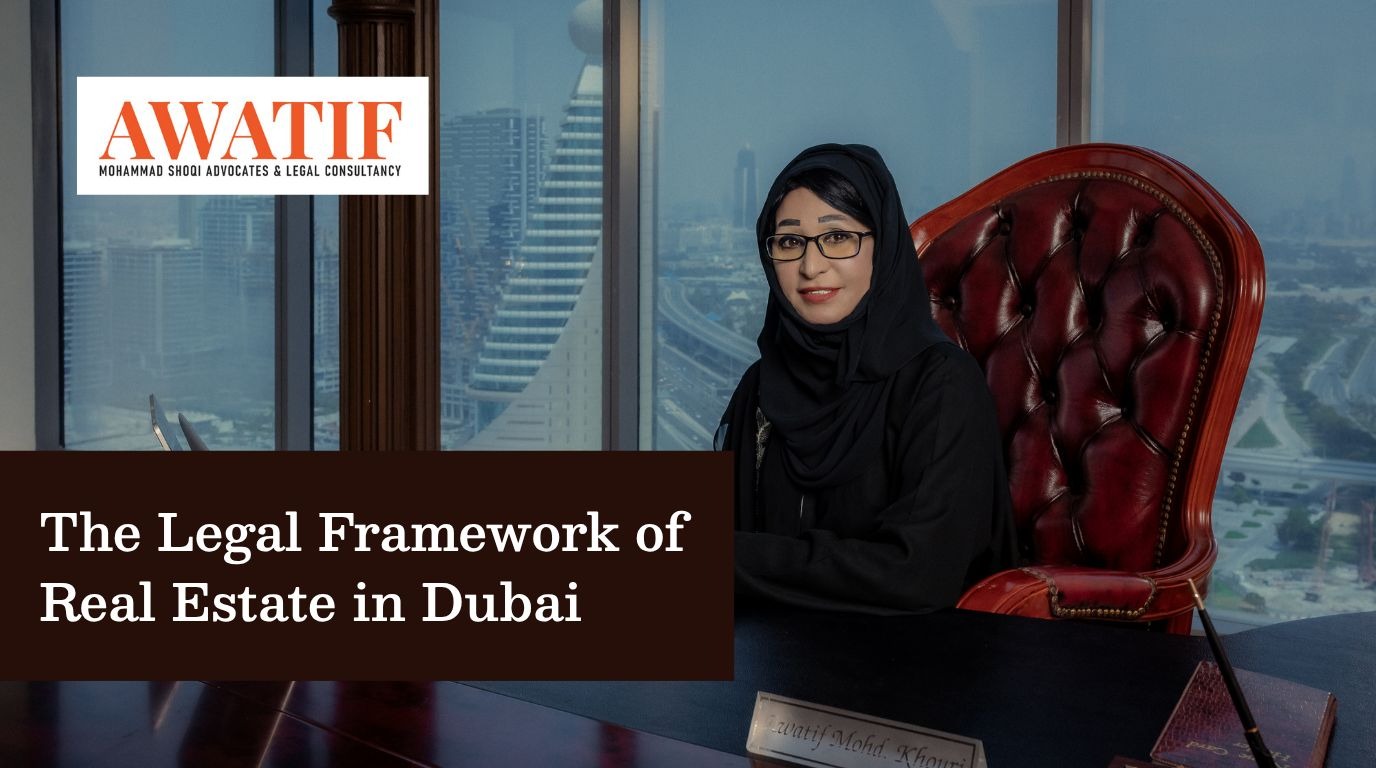
The guide begins with an overview of real property definitions and registration. It explains that Law No. 7 of 2006 defines real property as anything permanently attached to land and describes the role of the Dubai Land Department in maintaining the Property Register as the sole repository for registered real estate rights and long-term leases. The guide reiterates the legal requirement that actions affecting real estate rights must be recorded in the Property Register to be enforceable, setting out the procedural steps that follow registration.
A dedicated section addresses ownership eligibility and designated freehold areas. The guide summarizes Article 4 of Law No. 7 of 2006, which delimits ownership by UAE and GCC nationals and fully owned entities, and explains Regulation No. 3 of 2006 and Article 3’s list of specified freehold areas where non-UAE citizens may obtain freehold title or ninety-nine-year leases. The treatment explains how these provisions shape acquisition strategies for foreign investors while preserving the statutory framework that governs title transfer and alienability.
Musataha rights are examined with reference to Decree No. 23 of 2022. The guide sets out the definition of Musataha under Article 1, the contractual foundation and registration requirement, the maximum thirty-five-year term in Article 6 with potential extension to a combined fifty years, and Article 11’s allocation of ownership of structures built by the Musataha holder for the contract term. The guide outlines development obligations, permitted uses and performance timelines imposed on Musataha holders to ensure responsible land development.
Mortgages and financing receive a comprehensive treatment under Law No. 14 of 2008. The guide explains the legal definition of mortgage in Article 2, the licensing requirement for mortgagees under Article 4, and the rule that mortgages take legal effect upon registration with the Dubai Land Department. Special attention is given to Articles 21 and 22 allowing mortgages on rights such as Musataha and long-term leases, the foreclosure and forced sale procedure in Articles 25 and 26, and the events that extinguish a mortgage, including full repayment and expiry of the underlying right.
Governance of jointly owned property and the obligations of owners committees are described with reference to Law No. 6 of 2019. The guide details Article 2’s application to multi-unit developments, the establishment of Owners Committees under Article 22 and the responsibilities listed in Article 24, including oversight of shared facilities and budgetary control. Service charges, annual maintenance budgeting and the statutory requirement under Article 25 for owners to meet service charge obligations are set out to clarify financial governance of communities.
Fractional ownership, pre-emption and leasing rights are covered in the guide to address co-ownership constraints and protection mechanisms. The treatment explains Article 13’s restriction against division of units owned by multiple persons without Main Complex System and Dubai Land Department approval, and Article 14’s grant of co-owner pre-emption rights to acquire shares offered to third parties. These provisions are analyzed for their effect on transferability and unit-level governance.
The guide addresses developer liability and termination of rights, summarizing the ten-year structural liability period for developers following issuance of completion certificates, the one-year liability for certain systems after handover, and termination events for Musataha and mortgages as set out in Decree No. 23 of 2022 and Law No. 14 of 2008. The text explains legal bases for termination, including mutual agreement, expiry or failure to meet completion requirements, and the interaction with related rights such as easements.
A substantial section on landlord-tenant regulation explains the mandatory registration of tenancy contracts through the Ejari system, RERA’s role in rent regulation and the Dubai Rent Index, and the function of the Rental Disputes Settlement Center in adjudicating landlord-tenant matters. The guide sets out Article 25(1)’s notice and eviction mechanics for unpaid rent, subletting and illegal use, the thirty-day notice requirement via Notary Public, the twelve‑month notice for repossession where statutory grounds apply, and Article 29’s re-entry rights for tenants displaced by demolition and rebuilding.
The publication includes a case study that illustrates application of these provisions in contested transactions and Rental Disputes Settlement procedures. The case involves a purchaser who acquired a residential investment unit and later discovered recurring water damage linked to rooftop facilities. Litigation led by the firm resulted in a judgment for compensation, legal interest and compelled remediation by the developer, a decision sustained on appeal and affirmed by the Court of Cassation. The case study is presented to demonstrate legal arguments on misrepresentation, broker disclosure obligations and joint liability among broker, seller and developer, and to explain evidentiary and procedural approaches used in courtroom and Rental Disputes Settlement proceedings.
The guide concludes with practical observations on compliance, registration, dispute prevention and enforcement pathways under Dubai’s statutory framework. It frames the legal regime as a set of rules and procedures designed to govern real estate rights, support dispute resolution through the Rental Disputes Settlement Center and other tribunals, and inform transactional and litigation strategies in the Emirate.
About Awatif Mohammad Shoqi Advocates & Legal Consultancy
Awatif Mohammad Shoqi Advocates & Legal Consultancy is a Dubai-based law firm specializing in real estate, litigation and regulatory advisory services. The firm provides legal representation in property disputes, transactional work and regulatory compliance matters, and advises clients on the application of Dubai’s real estate laws and related statutory regimes.
MEDIA DETAILS
Contact Person: Media Relations
Company Name: Awatif Mohammad Shoqi Advocates & Legal Consultancy
Email: info@alrowaad.ae
Website: https://www.alrowaad.ae/
SOURCE: Awatif Mohammad Shoqi Advocates & Legal Consultancy
View the original press release on ACCESS Newswire